
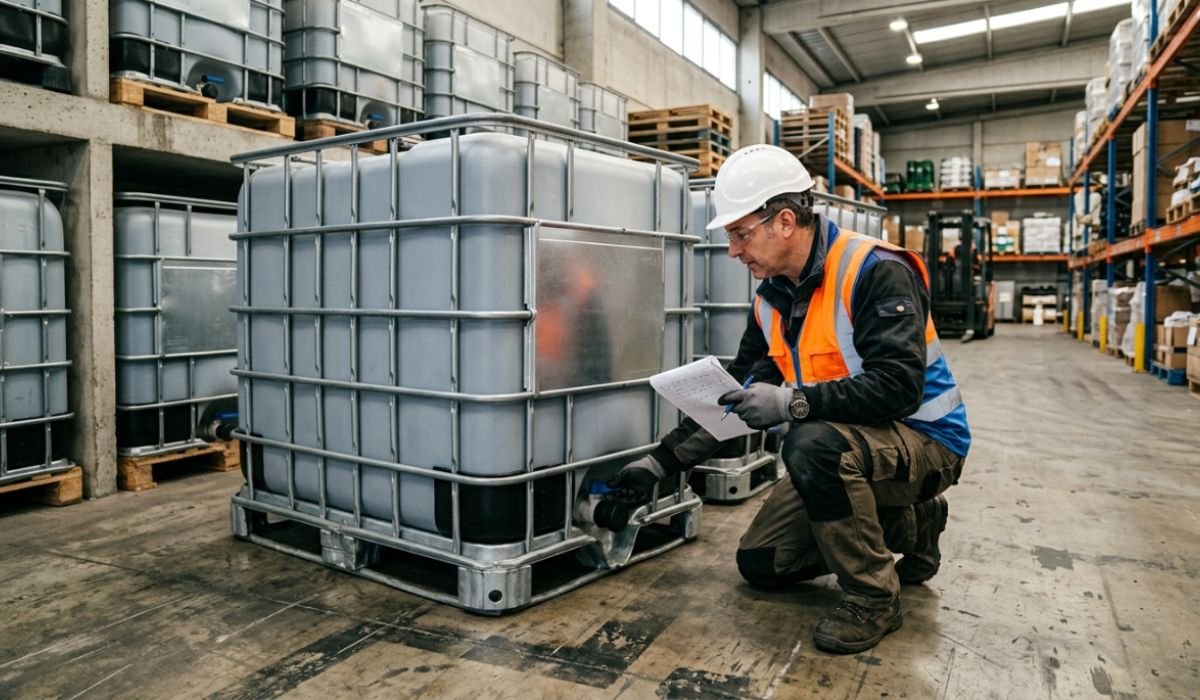
The right container for the bulk liquids could impact on storage and transportation, safety and cost. What may seem to be a good container on paper may not be the best one for the product or warehouse.
Before ordering, procurement teams should verify the size, type of material, durability, compatibility, ease of handling, cleaning requirements and supplier quality of the containers. They also should think in terms of the total cost of the container over its useful life, rather than just the price of the container.
By carefully considering these factors, businesses can prevent product damage, storage issues, and unneeded replacement expenses.
Some crucial factors that should be examined by key factors procurement teams are:
1. Match the Container with the Liquid.
A first check should be made to see if the container is suitable to store the liquid. Plastic, metals, seals and other materials may react differently to various liquids. Chemical properties of the product should be considered when choosing a container.
The selection may be influenced by acidity, temperature, density and viscosity. For many general liquid products, an IBC tank can actually be a viable storage and transport solution, albeit with checking the IBC tank model with the liquid in question. It is always advisable to check supplier specifications and compatibility information prior to purchase.
2. Choose the appropriate container capacity.
The size of the container should be in keeping with the requirements of the company for storage and transport. Containers that are too small may require more handling and more room due to greater number of units required.
If the business doesn’t frequently require this much container space, there might be issues with oversized containers. Procurement groups should take a look at the average amount of inventory, delivery schedules, warehouse space, and anticipated demand.
They should also take into account the need for forklift or pallet equipment to move the containers. Choosing the right capacity can optimize storage space utilization, handling time, and operating costs.
3. Check Material Quality
The strength, weight, durability and resistance to various products of a liquid container depends on the material used. High density polyethylene, steel, and other specially designed materials are commonly used.
The procurement teams need to be aware of the suitable material to be used. They should also look at wall thickness and construction quality, if applicable.
An expensive container can provide better performance in handling and transport but will be a higher initial cost. Therefore, it is important to consider material quality in conjunction with product compatibility, and not as a separate purchasing consideration.
5. Develop Independence and Control
Bulk liquid containers can be transported numerous times throughout their duty life. Pressure can be applied by forklifts, pallets, transport vehicles, stacking and handling in the warehouse.
Procurement teams should ensure that they verify that the container to be used can tolerate the conditions it is expected to encounter without cracking, bending or leaking. Load limits, stacking capability, and impact resistance information is helpful when comparing products.
Another aspect businesses should pay attention to is the intended use context for the business containers. If it is to be used outdoors often, in high temperatures, or during rough transport some might need to be more robustly built and well protected.
5. Review Handling Requirements
Even if a container has a suitable storage volume, if it is not easy to move, it will be difficult to use. Procurement teams need to consider: Forklift access, Lifting points, Pallet design, Outlet position, Overall weight.
The container should be compatible with the existing handling equipment at the warehouse. Valves and fittings which are easily accessible may also make filling and emptying easier.
By minimizing unproductive movements, good handling design helps to decrease the risk of accidents or product damage. Teams should also compare the design of the container to the actual process that takes place in the warehouse before purchase.
6. Inspect Outlet & Fitting Design
An outlet is a crucial feature of a bulk liquid container as it regulates the release of the product. Procurement teams should verify the valve type, fitting size, connection method and quality of the seal.
The outlet should be compatible with the existing pumps, hoses and filling equipment that the business utilizes. Different adapters or equipment may be required if the match is not good.
The ease of inspection and replacement of fittings is another factor to be taken into account. Selecting complementary components can minimize handling time and increase the efficiency of everyday liquid transfer tasks.
7. Assess cleaning and re-use possibilities.
For items that must be reused, procurement teams need to know how easy or difficult it is to clean and inspect the containers. Residue from some liquids may be left and will need special cleaning processes. The container design should assure that the important internal and external areas are accessible to the workers in safety.
Businesses should also verify if the container can be repaired, refurbished or reused through a supplier reuse program. When properly maintained, reusable containers might offer long term savings.
But, cleaning must be done to the specification of the product being stored as well as the company’s safety rules.
8. Supplier Quality and Support Assessments (8)
The supplier is as crucial as the container itself. The procurement teams should consider the supplier’s product range, quality controls, delivery record, technical support and after sales service.
Good suppliers will be able to give clear specifications and details of proper use. They should also be able to answer questions concerning compatibility, handling and maintenance.
Businesses that buy in bulk may want to talk about delivery schedules and replacement arrangements prior to ordering. A reliable supplier can also help ensure that future purchases are easier and minimize issues with inconsistent container quality.
Critical Cost Factors to Consider
Beyond the purchase price” is the term to use.
Low cost does not necessarily mean the most economical container. The procurement team should take into account the entire life cycle of the container’s use. This can involve transportation, handling, cleaning, repairs, storage, replacement and disposal.
If the container is going to last for a longer period of time, it may be worth more despite the higher cost. Businesses should also take into account the impact that container design will be having on labor cost.
A more portable, fillable, emptiable or cleanable product can save on operating costs over the long haul. So total cost should be used to determine the purchase.
View delivery and availability
Procurement should be assured about the speed of container supply, and the ability of the supplier to meet future requirements. If you have existing containers with low stocks, there can be storage issues due to the long lead times.
Businesses should inquire about minimum order quantities, delivery addresses, production times and inventory. Where liquid products are used more extensively during certain seasons, their seasonal demand should also be taken into consideration.
A solid supply plan will help avoid “just in time” buying of items at higher prices. It also assists warehouse managers in maintaining an appropriate level of containers while avoiding an excessive amount of stock.
For safety and compliance, please consider the following:
When storing liquid products in bulk, care must be taken to ensure that the material is safe and meets the specified requirements. Before purchasing containers, procurement teams should review the following:
- Determine the type of liquid: Hazardous liquids, flammable liquids, corrosive liquids, and liquids that have special storage requirements.
- Check compatibility of containers: Ensure that the material and fittings of the container are appropriate for the liquid.
- Check labelling requirements: Make sure containers are able to be labelled with the necessary product, hazard and handling warnings.
- Check closures and fittings: Ensure lids, valves, seals and other components will not leak during storage and handling.
- Think spill containment: Assess the need for secondary containment and other spill containment controls.
- Check transport requirements: If containers need to be transported between locations, ensure that they comply with the appropriate transport requirements.
- Use qualified suppliers: Ensure that suppliers are able to offer a clear product specification, safety information and instructions for proper usage.
Compliance and safety should be verified at the time of purchase and not after the containers have been delivered to the warehouse.
Conclusion
When sourcing bulk liquid containers, procurement teams need to consider more than just the price. They must take into account liquid compatibility, capacity, material, durability, handling, fittings, cleaning, supplier support, delivery and total operating cost.
Purchasing should also include the safety considerations and storage requirements. By carefully comparing, businesses can select the most suitable containers for their warehouse systems and daily operations.
Focus on long-term value rather than just the purchase price allows procurement teams to minimize waste, enhance handling, and make more informed bulk liquid storage decisions.